
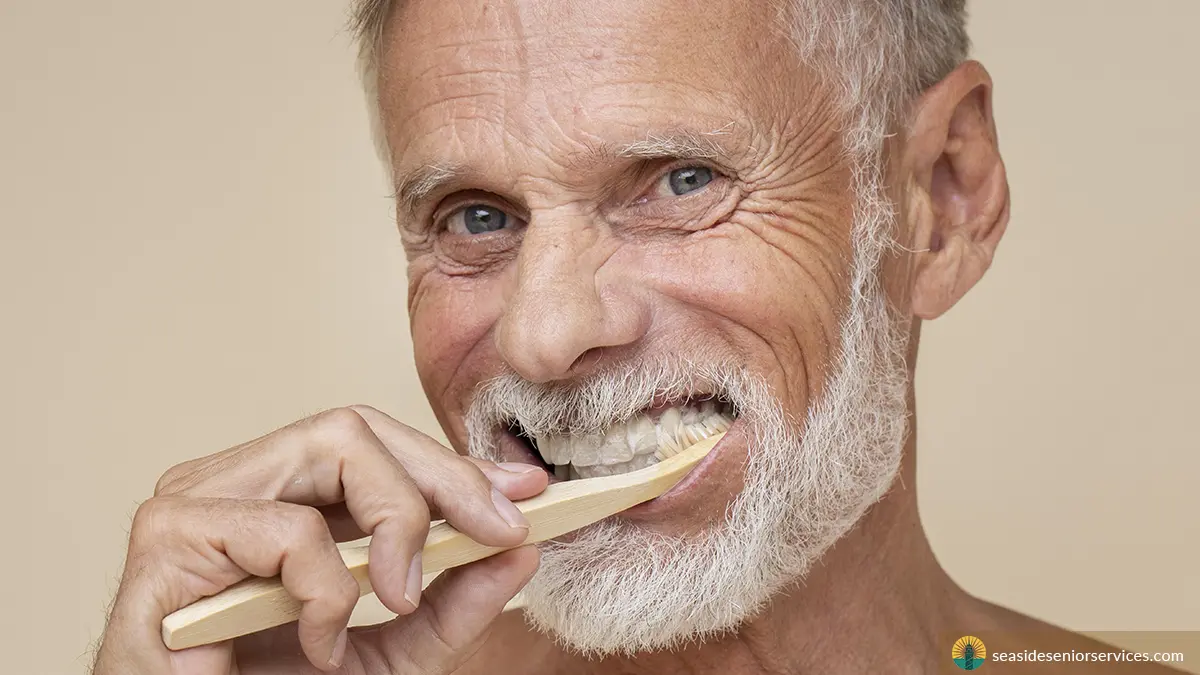

Your mouth plays a crucial role in nutrition, and when dental issues arise, they can trigger a chain reaction that impacts well-being and overall health. For aging adults, the link between oral health and nutrition becomes even more important, yet it’s often overlooked until complications appear. Understanding how oral health affect senior nutrition can make a meaningful difference in quality of life.
At Seaside Senior Services, LLC, caregivers see firsthand how oral health challenges can impact seniors’ ability to eat well and stay healthy at home.


The Importance of Oral Health in Aging Adults
Oral health is about more than a bright smile. In fact, it’s essential for communication, daily comfort, and the ability eat properly. When certain conditions make chewing difficult, it can affect what, and how much seniors are able to eat. For example, tooth decay and gum disease, missing teeth or ill-fitted dentures, oral infections, or dry mouth (caused by medications).
How Oral Health Quietly Affects Senior Nutrition
The relationship between oral health and nutrition is deeply connected. When oral health declines, nutrition often follows.
1. Difficulty Chewing
When it’s a challenge to chew properly, you will inevitably swallow larger pieces of food, which leads to common digestive issues. Foods like lean meats, vegetables, and even fruit, require proper chewing. Plus, digesting large bites of food make it difficult for your body to break them down and absorb the nutrients. In these cases, you are likely not receiving full nutritional value from the foods you eat.
2. Unintentional Weight Gain
Eating can become very uncomfortable, sometimes painful, when you have weakened tooth enamel, ill-fitting dentures, or gum disease. Obviously, you may choose softer food instead. However, many soft foods are low in essential nutrients like vitamins, protein, and fiber, but high in carbohydrates. As a result, you may gain weight from eating more unhealthy foods.
3. Nutritional Deficiencies
Many seniors will avoid the dentist when they are experiencing dental discomfort. Instead, they may simply adjust their eating habits. For example, choosing softer foods like pasta versus protein-rich salmon. And this is how oral health affect seniors nutrition. As a result, these seemingly small changes can lead to nutritional deficiencies over time.
How Seaside Senior Services, LLC Can Help
Professional caregiving services play an important role in supporting both oral health and nutrition. At Seaside Senior Services, LLC, caregivers assist seniors with daily routines that promote better health outcomes.
Our caregivers provide oral care support by encouraging brushing and flossing, assisting with denture care, and monitoring for signs of oral discomfort. During meal preparation, caregivers prepare nutrient-dense meals, which ensures a balanced diet tailored to dietary needs. Plus, our caregivers can spot early warning signs like difficulty chewing or swallowing. These observations and early intervention prevents more serious health issues for seniors down the line.
How To Improve Oral Health and Nutrition At Home
The upside is there are steps seniors can take to protect their oral health as well as nutrition. At the top of the list is scheduling regular dental checkups. Doing so helps prevent many dental issues or address them early on with proper care.
Not brushing regularly is how oral health affects senior nutrition in the long run. Food often gets caught between the teeth. If not removed by brushing or flossing, it can lead to decay and cause gum problems.
When it comes to food prep, sometimes you have to be creative. Some raw vegetables like celery or cucumbers may be difficult to chew. Instead of avoiding eating them, try roasting or steaming them until tender. If you feel you’re missing out on protein by skipping certain cuts of meat, switch to Greek yogurt, ground meat, or fish. And don’t forget about smoothies. They are a great way to get in both vegetables and fruit servings.
The bottom line is don’t ignore dental discomfort or pain. Instead of making adjustments to the foods you eat, often choosing less nutritious items, visit your dentist. Because what seems like something you can “just deal with” today, can lead to serious health and nutritional consequences tomorrow.
Final Thoughts
The key to helping older adults thrive while aging at home is understanding how oral health affect senior nutrition. Good oral health improves overall well-being, supports stronger bodies, and better eating habits.
Understanding how oral health affect senior nutrition is key to helping older adults thrive while aging at home. Good oral health supports better eating habits, stronger bodies, and improved overall well-being.
With compassionate support from providers like Seaside Senior Services, LLC, families can ensure their loved ones maintain both their oral health and nutritional needs. The result? Healthier, more independent life at home.
Frequently Asked Questions
- How does oral health affect senior nutrition?Oral health directly impacts a senior’s ability to chew and enjoy a variety of foods. Issues like missing teeth, gum disease, or poorly fitting dentures can make it difficult to eat nutrient-rich foods such as fruits, vegetables, and proteins, leading to poor nutrition.
- What dental problems commonly affect seniors' eating habits?Common issues include tooth loss, gum disease, dry mouth, and tooth sensitivity. These conditions can cause pain or discomfort while eating, often leading seniors to avoid certain foods or rely on softer, less nutritious options.
- Can poor oral health lead to malnutrition in older adults?Yes, poor oral health can contribute to malnutrition. When seniors struggle to chew or experience pain, they may eat less or choose foods that lack essential nutrients, which can negatively affect their overall health.
- What foods are best for seniors with dental issues?Soft, nutrient-dense foods are ideal, such as yogurt, eggs, smoothies, cooked vegetables, oatmeal, and tender proteins like fish or shredded chicken. These options are easier to chew while still providing important vitamins and minerals.
- How can seniors maintain good oral health at home?Seniors should brush twice daily with fluoride toothpaste, floss regularly, stay hydrated, and schedule routine dental checkups. Proper denture care and avoiding excessive sugary foods also help maintain oral health.
- Why is saliva important for nutrition and oral health?Saliva helps break down food, making it easier to chew and swallow. It also protects against bacteria and tooth decay. Reduced saliva production (dry mouth) can make eating uncomfortable and increase the risk of dental problems. Some medications can cause dry mouth.

One of the most effective ways to promote health and…

When families begin exploring care options for an aging loved…

As our population ages, protecting older adults becomes a shared…

A new year is a perfect opportunity for fresh starts,…